

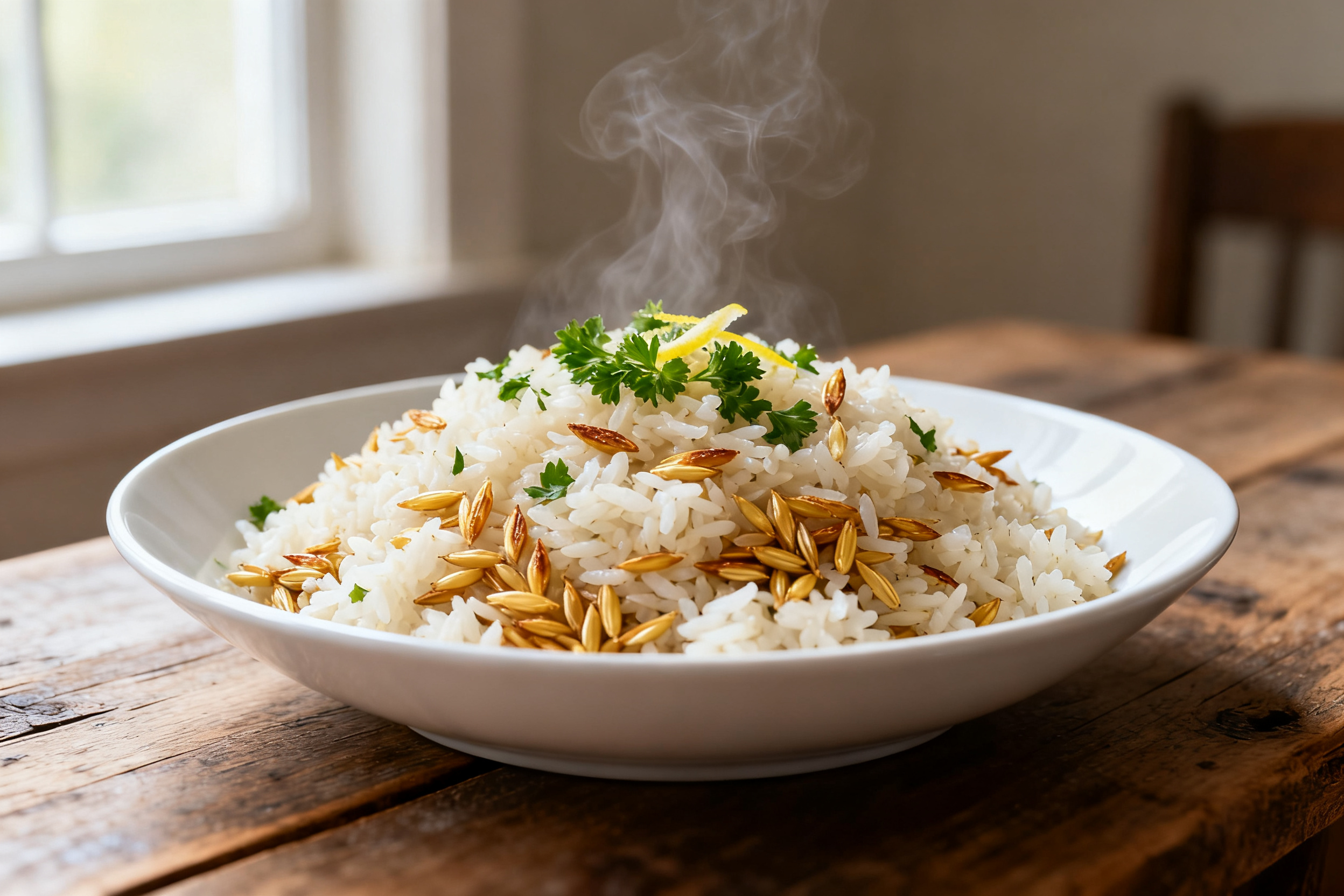
Meet the side dish I make when I want zero fuss and plenty of flavor: rice pilaf. It’s buttery, fragrant, and dotted with golden orzo. Every grain turns out separate and tender, perfect next to anything from grilled chicken to roasted veggies.
The method here is classic and reliable, with just a handful of pantry ingredients. If you’ve struggled with mushy or sticky rice, this recipe will change that for good.
Why this rice pilaf works
This recipe builds flavor in layers. First, orzo toasts in butter and olive oil until golden and nutty. Then onion and garlic soften in the pan, creating a savory base for the rice.
The rice gets a quick toast too, which helps it stay fluffy. The liquid ratio is 1 cup rice to 2 cups broth, so you get tender grains without sogginess. A covered simmer and a 10-minute rest at the end are the simple steps that make the texture come out just right.
What you’ll need
Classic rice pilaf uses long-grain rice, a bit of pasta, and good broth. Fresh parsley and a touch of lemon wake everything up at the end.
- 2 tbsp unsalted butter
- 1 tbsp olive oil
- 1/2 cups orzo pasta
- 1 small yellow onion, finely chopped
- 2 garlic cloves, minced
- 1 cups long-grain white rice, rinsed and well drained
- 2 cups low-sodium chicken broth
- 3/4 tsp kosher salt
- 1/4 tsp black pepper
- 1 bay leaf
- 2 tbsp fresh parsley, chopped
- 1 tsp lemon zest, optional
How to make it
Follow these simple steps for light, fluffy pilaf every time.
- Rinse the rice in a fine-mesh strainer under cool water, swishing with your hand, until the water runs mostly clear. Drain well and set aside.
- Set a medium, heavy-bottomed saucepan over medium heat. Add the butter and olive oil. When the butter melts and foams, add the orzo and cook, stirring often, until deeply golden, 3 to 5 minutes.
- Stir in the onion and cook until softened and translucent, 2 to 3 minutes. Add the garlic and cook until fragrant, 30 seconds.
- Add the rinsed rice and stir to coat, toasting for 1 minute to lightly dry the grains.
- Pour in the chicken broth, then add the salt, pepper, and bay leaf. Stir once to combine and bring to a gentle boil.
- Reduce the heat to low so the surface barely simmers. Cover tightly and cook without stirring until the liquid is absorbed and the rice is tender, 15 to 18 minutes.
- Remove from the heat and keep covered to rest for 10 minutes. Do not lift the lid during this time.
- Uncover, discard the bay leaf, and fluff the pilaf with a fork. Fold in the parsley and lemon zest, taste, and add a pinch more salt if needed.
- Serve warm, garnished with extra parsley if you like.
Storage, make-ahead and reheating
Rice pilaf keeps well in the fridge for up to 4 days. Cool it quickly by spreading it on a sheet pan for 10 minutes before transferring to a sealed container.
To reheat on the stovetop, add a splash of water or broth to a skillet, cover, and warm over low heat until steamy, 5 to 7 minutes, fluffing a few times. Microwave with a damp paper towel over the bowl in 60-second bursts, stirring in between. If you plan to make it ahead for a party, cook it slightly al dente, chill, then reheat with 2 to 3 tablespoons of broth to bring back moisture and shine.
 Save
Common mistakes to avoid
- Skipping the rinse: Unrinsed rice holds excess surface starch and can turn gummy. Rinse until the water runs mostly clear.
- Using the wrong ratio: Too much liquid leads to mush. Stick to 2 cups broth per 1 cup rice for long-grain white rice.
- Stirring while it simmers: Stirring breaks grains and releases starch. Once covered, do not stir until it is done resting.
- Peeking under the lid: Lifting the lid releases steam and extends the cook time. Trust the timer and check only at the end.
- Skipping the rest: The 10-minute covered rest lets moisture redistribute so the rice fluffs instead of clumping.
Variations and smart substitutions
- Vegetarian: Use vegetable broth instead of chicken broth. Add a handful of peas in the last 5 minutes for color and sweetness.
- Herby lemon: Stir in 2 tablespoons chopped dill or chives with the parsley, plus extra lemon zest to taste.
- Toasted almond: Fold in 1/3 cup toasted slivered almonds after fluffing for crunch.
- No orzo: Replace orzo with broken spaghetti or vermicelli, or skip it entirely and reduce butter by 1 tablespoon.
- Spiced: Warm 1/2 teaspoon each ground cumin and coriander in the butter and oil before adding the orzo for a cozy, aromatic twist.
 Save
What to serve with rice pilaf
Rice pilaf is a flexible side that fits weeknight and weekend meals. It pairs well with roasted salmon, grilled chicken, lamb chops, or sautéed mushrooms and zucchini.
If you love one-pan dinners, it’s especially good alongside juicy chicken. Try it with these one pot chicken thigh recipes for an easy, satisfying meal.
Rice pilaf questions, answered
What is the best rice for rice pilaf?
Long-grain white rice is ideal because the grains cook up separate and fluffy. Basmati works beautifully for a slightly drier, more aromatic pilaf, while jasmine gives a softer texture with a gentle floral note.
Do I have to use orzo in pilaf?
No. Orzo adds a classic look and nutty flavor, but you can swap in broken spaghetti, vermicelli, or fine egg noodles. If you skip the pasta entirely, keep the same rice-to-liquid ratio and reduce the butter by about 1 tablespoon.
Why did my pilaf turn out sticky?
Stickiness usually comes from extra surface starch or too much stirring. Rinse the rice well before cooking, avoid lifting the lid, and do not stir while it simmers. Be sure to rest it covered for 10 minutes, then fluff with a fork.
Can I double this recipe?
Yes. Use a wider pot so the rice cooks evenly, keep the same ratios, and add 2 to 3 extra minutes of simmer time if needed. Resist the urge to stir; instead, listen for a gentle simmer and keep it covered.
How can I make it vegetarian or vegan?
For vegetarian, simply use vegetable broth. For vegan, use vegetable broth and replace the butter with 1 extra tablespoon of olive oil, or a dairy-free butter you like.
Final thoughts
This rice pilaf is simple enough for a Tuesday and special enough for company. Once you make it a couple of times, you will have the rhythm down and can riff with herbs or nuts.
Keep the ratio right, resist stirring, and let it rest. You will get a pot of fluffy, fragrant rice every time.

Rice Pilaf
Buttery, fragrant rice pilaf with toasted orzo, fluffy long-grain rice, and savory broth. A reliable stovetop method for tender, separate grains.
Ingredients
Instructions
- Rinse the rice in a fine-mesh strainer under cool water, swishing with your hand, until the water runs mostly clear. Drain well and set aside.
- Set a medium, heavy-bottomed saucepan over medium heat. Add the butter and olive oil. When the butter melts and foams, add the orzo and cook, stirring often, until deeply golden, 3 to 5 minutes.
- Stir in the onion and cook until softened and translucent, 2 to 3 minutes. Add the garlic and cook until fragrant, 30 seconds.
- Add the rinsed rice and stir to coat, toasting for 1 minute to lightly dry the grains.
- Pour in the chicken broth, then add the salt, pepper, and bay leaf. Stir once to combine and bring to a gentle boil.
- Reduce the heat to low so the surface barely simmers. Cover tightly and cook without stirring until the liquid is absorbed and the rice is tender, 15 to 18 minutes.
- Remove from the heat and keep covered to rest for 10 minutes. Do not lift the lid during this time.
- Uncover, discard the bay leaf, and fluff the pilaf with a fork. Fold in the parsley and lemon zest, taste, and add a pinch more salt if needed.
- Serve warm, garnished with extra parsley if you like.
Notes
- Use a pot with a tight-fitting lid to trap steam for even cooking.
- If using jasmine rice, check for doneness 1 to 2 minutes earlier; it cooks slightly faster.
- For vegetarian pilaf, swap chicken broth for vegetable broth and keep the same ratios.


Leave a Reply