

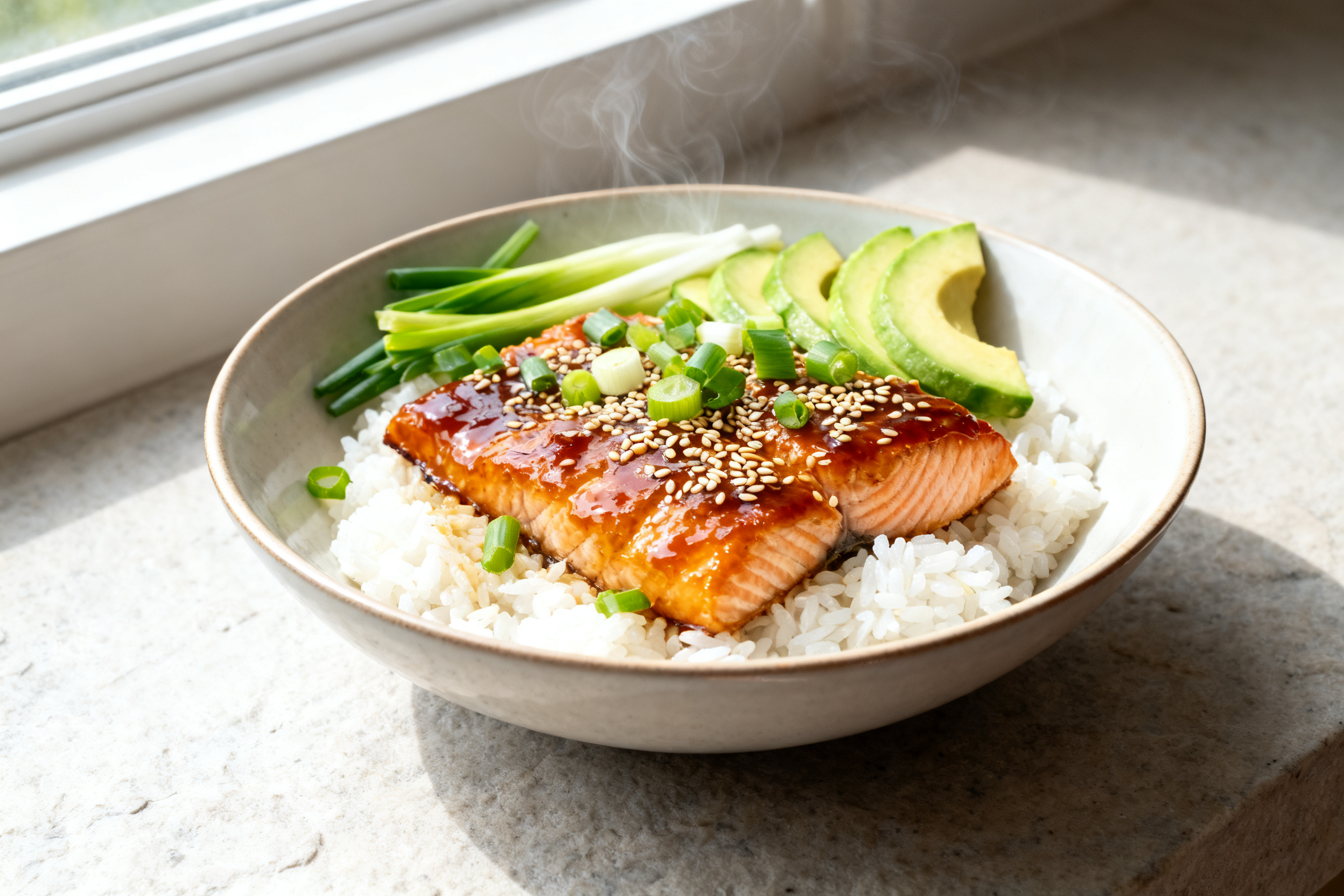
This Sticky Sesame Salmon Rice Bowl is one of those dinners that checks all the boxes: fast, glossy-sauced, and wildly satisfying. The salmon sears up tender and flaky, then gets coated in a shiny, sweet-salty sesame glaze that clings to every bite.
You’ll spoon it over warm rice with crisp cucumber, creamy avocado, and a sprinkle of scallions and sesame seeds. It feels special, but it’s ready in about 30 minutes on a weeknight.
Why this sticky sesame salmon works so well
The magic here is balance. The sauce brings savory soy, gentle heat, bright rice vinegar, and just enough honey to make it sticky and glossy without turning cloying. A quick cornstarch slurry thickens the glaze so it hugs the salmon and drips over the rice in the best way.
Pan-searing the salmon gives you crisp edges and juicy centers in minutes. While the fish rests, the sauce cooks down in the same pan, picking up the caramelized bits left behind. Layered into a bowl with warm rice and fresh toppings, every bite has contrast: soft, crunchy, sweet, salty, and a little toasty from the sesame oil.
What you’ll need
Simple pantry staples make a restaurant-style glaze, and a few fresh toppings add crunch and creaminess. If you want guaranteed fluffy rice, see these tips in this easy stovetop rice guide.
- 3 cups cooked jasmine rice, warm
- 1 1/4 lb salmon fillets, skin-on, cut into 4 portions
- kosher salt, light seasoning for salmon
- black pepper, light seasoning for salmon
- 1 tbsp neutral oil, such as avocado or canola
- 1/3 cup low-sodium soy sauce
- 3 tbsp honey
- 1 tbsp rice vinegar
- 1 tbsp toasted sesame oil
- 1/3 cup water
- 3 cloves garlic, finely minced
- 1 tbsp fresh ginger, finely grated
- 1-2 tsp sriracha, optional, to taste
- 2 tsp cornstarch
- 2 tsp cold water, for slurry
- 2 scallions, thinly sliced
- 1 tbsp toasted sesame seeds
- 1 small cucumber, thinly sliced
- 1 ripe avocado, sliced
- 1 lime, cut into wedges, optional
- nori strips, optional, for garnish
How to make it
Quick steps, one pan for the salmon and sauce, and then build your bowl.
- Prep the rice and toppings: Warm the cooked jasmine rice. Slice the cucumber and avocado, and thinly slice the scallions so they’re ready when the salmon is glazed.
- Season and sear the salmon: Pat the salmon dry with paper towels and season lightly with salt and pepper. Heat the neutral oil in a large nonstick or well-seasoned skillet over medium-high heat until shimmering, then add the salmon skin-side down. Cook 3 to 4 minutes until the skin is crisp and the sides are turning opaque, then flip and cook 2 to 3 minutes more until just shy of your preferred doneness. Transfer to a plate and tent loosely with foil.
- Whisk the sauce: In a bowl or measuring cup, combine soy sauce, honey, rice vinegar, toasted sesame oil, 1/3 cup water, garlic, ginger, and sriracha if using. In a separate small bowl, stir together cornstarch and 2 teaspoons cold water to make a smooth slurry.
- Make it sticky: Pour the sauce mixture into the same skillet over medium heat, scraping up any browned bits. Bring to a gentle simmer, then whisk in the cornstarch slurry and cook 1 to 2 minutes, stirring, until the glaze turns glossy and thick enough to coat a spoon.
Glaze the Salmon and Assemble the Rice Bowl
- Glaze the salmon: Return the salmon to the pan and spoon the sauce over the fillets for 30 to 60 seconds, just until coated and heated through. If your salmon is already perfectly cooked, keep the heat low so it doesn’t overcook.
- Build the bowls: Divide warm rice among 4 bowls. Top each with a salmon portion, then spoon extra sticky sesame glaze over the fish and rice.
- Finish and serve: Add cucumber, avocado, and scallions. Sprinkle with toasted sesame seeds, add nori strips if you like, and serve with lime wedges for squeezing. Taste and add a splash of soy or a drizzle of sesame oil if you want a stronger flavor.
Storage, make-ahead, and reheating
Cooked salmon and sauce keep well for 2 days in the fridge. Store the rice, salmon, and toppings separately so the textures stay fresh. The sauce will thicken as it chills; loosen it with a teaspoon or two of water when reheating.
To reheat, warm the rice in the microwave with a damp paper towel. Reheat the salmon gently in a covered skillet over low heat with a splash of water until just warmed through, or microwave in short bursts. Add fresh toppings after reheating for the best contrast.
If you want to work ahead, whisk the sauce ingredients up to 3 days in advance and keep them chilled. Slice the cucumber and scallions the day you serve so they stay crisp, and cut the avocado right before eating.
 Save
Common mistakes to avoid
- Overcrowding the pan: Sear the salmon in batches if needed so it browns instead of steaming.
- Not patting salmon dry: Moisture prevents good sear and crust. Pat with paper towels before seasoning.
- Cranking heat too high for the glaze: Simmer, don’t boil hard. A gentle bubble thickens the sauce without scorching honey and garlic.
- Adding cornstarch directly: Always mix into a slurry with cold water first. This prevents lumps and keeps the glaze smooth and shiny.
- Salting heavily before a soy-based sauce: The soy brings salt. Season the fish lightly so the final bowl isn’t too salty.
Variations and smart substitutions
- Swap the sweetener: Use brown sugar or maple syrup in place of honey. Start with the same amount and adjust to taste.
- Make it spicier: Add more sriracha or a pinch of red pepper flakes to the sauce.
- Differently cooked salmon: Air-fry at 400°F (200°C) for 7 to 9 minutes, then toss with the thickened sauce, or bake at 425°F (220°C) for 10 to 12 minutes.
- Use another protein: Try shrimp, tofu cubes (pressed and pan-fried), or chicken thigh strips. Cook times will vary; add the glaze once your protein is nearly done.
- Change the base: Serve over brown rice or quinoa for a nutty chew, or do lettuce cups if you want a lighter bowl.
- Gluten-free: Use tamari or certified gluten-free soy sauce and check your sriracha brand.
 Save
What to serve with sticky sesame salmon bowls
These bowls are a complete meal, but a crunchy side never hurts. A tray of crispy Parmesan cauliflower bites is great for nibbling while the salmon sears, and a bright salad like chickpea salad with feta and cranberries balances the rich glaze. If you want to brush up on fluffy rice technique, skim the tips in this simple rice pilaf guide before you start.
Sticky sesame salmon bowl FAQ
Can I use frozen salmon?
Yes. Thaw it fully in the fridge overnight or use the cold water method in a sealed bag for 30 to 45 minutes. Pat very dry before searing so you still get good browning, and expect it to cook a minute or two faster since individually frozen portions are often thinner.
What kind of rice is best for these bowls?
Jasmine or short-grain white rice works beautifully because it’s fluffy yet slightly sticky, so it catches the sauce. Brown rice or quinoa are fine too; just give them a minute to steam off extra moisture before building the bowls so they don’t water down the glaze.
How do I know the salmon is done without overcooking?
Look for flakes that separate easily with a fork and a slightly translucent center that turns opaque as it rests. An instant-read thermometer should register 125°F to 130°F for moist, medium salmon. It will carryover cook a couple of degrees off the heat.
Can I make the sauce without cornstarch?
You can simmer the sauce longer to naturally reduce and thicken, or swap in arrowroot starch. If using arrowroot, add only 1 1/2 teaspoons mixed with 1 1/2 teaspoons cold water and stir off the heat to avoid a gummy texture.
Is there a lower-sugar version?
Reduce the honey to 2 tablespoons and add 1 extra tablespoon of water so the glaze doesn’t get too tight. Taste after thickening and adjust with a splash more vinegar for brightness.
A quick, cozy finish
This bowl feels like a treat but asks so little from you on a busy night. Keep the sauce ingredients in your pantry and salmon in the freezer, and you’re always a half hour from a shiny, satisfying dinner.
When you make it, set aside a little extra glaze. The spoonfuls over tomorrow’s lunch will make you very happy.

Sticky Sesame Salmon Rice Bowl
Tender seared salmon coated in a glossy soy-honey sesame glaze, served over warm rice with crunchy cucumber, creamy avocado, and a shower of scallions and sesame seeds.
Ingredients
Instructions
- Prep the rice and toppings: Warm the cooked jasmine rice. Slice the cucumber and avocado, and thinly slice the scallions so they’re ready when the salmon is glazed.
- Season and sear the salmon: Pat the salmon dry with paper towels and season lightly with salt and pepper. Heat the neutral oil in a large nonstick or well-seasoned skillet over medium-high heat until shimmering, then add the salmon skin-side down. Cook 3 to 4 minutes until the skin is crisp and the sides are turning opaque, then flip and cook 2 to 3 minutes more until just shy of your preferred doneness. Transfer to a plate and tent loosely with foil.
- Whisk the sauce: In a bowl or measuring cup, combine soy sauce, honey, rice vinegar, toasted sesame oil, 1/3 cup water, garlic, ginger, and sriracha if using. In a separate small bowl, stir together cornstarch and 2 teaspoons cold water to make a smooth slurry.
- Make it sticky: Pour the sauce mixture into the same skillet over medium heat, scraping up any browned bits. Bring to a gentle simmer, then whisk in the cornstarch slurry and cook 1 to 2 minutes, stirring, until the glaze turns glossy and thick enough to coat a spoon.
- Glaze the salmon: Return the salmon to the pan and spoon the sauce over the fillets for 30 to 60 seconds, just until coated and heated through. If your salmon is already perfectly cooked, keep the heat low so it doesn’t overcook.
- Build the bowls: Divide warm rice among 4 bowls. Top each with a salmon portion, then spoon extra sticky sesame glaze over the fish and rice.
- Finish and serve: Add cucumber, avocado, and scallions. Sprinkle with toasted sesame seeds, add nori strips if you like, and serve with lime wedges for squeezing. Taste and add a splash of soy or a drizzle of sesame oil if you want a stronger flavor.
Notes
- For medium salmon, aim for 125°F to 130°F internal temperature; it will carryover cook slightly off heat.
- If the glaze gets too thick, whisk in 1 to 2 teaspoons water until it loosens to a spoonable consistency.
- Double the sauce if you love extra over rice and veggies. It keeps well for 3 to 4 days in the fridge.
- Air fryer tip: Cook salmon at 400°F (200°C) for 7 to 9 minutes, then toss or brush with warmed glaze.


Leave a Reply