

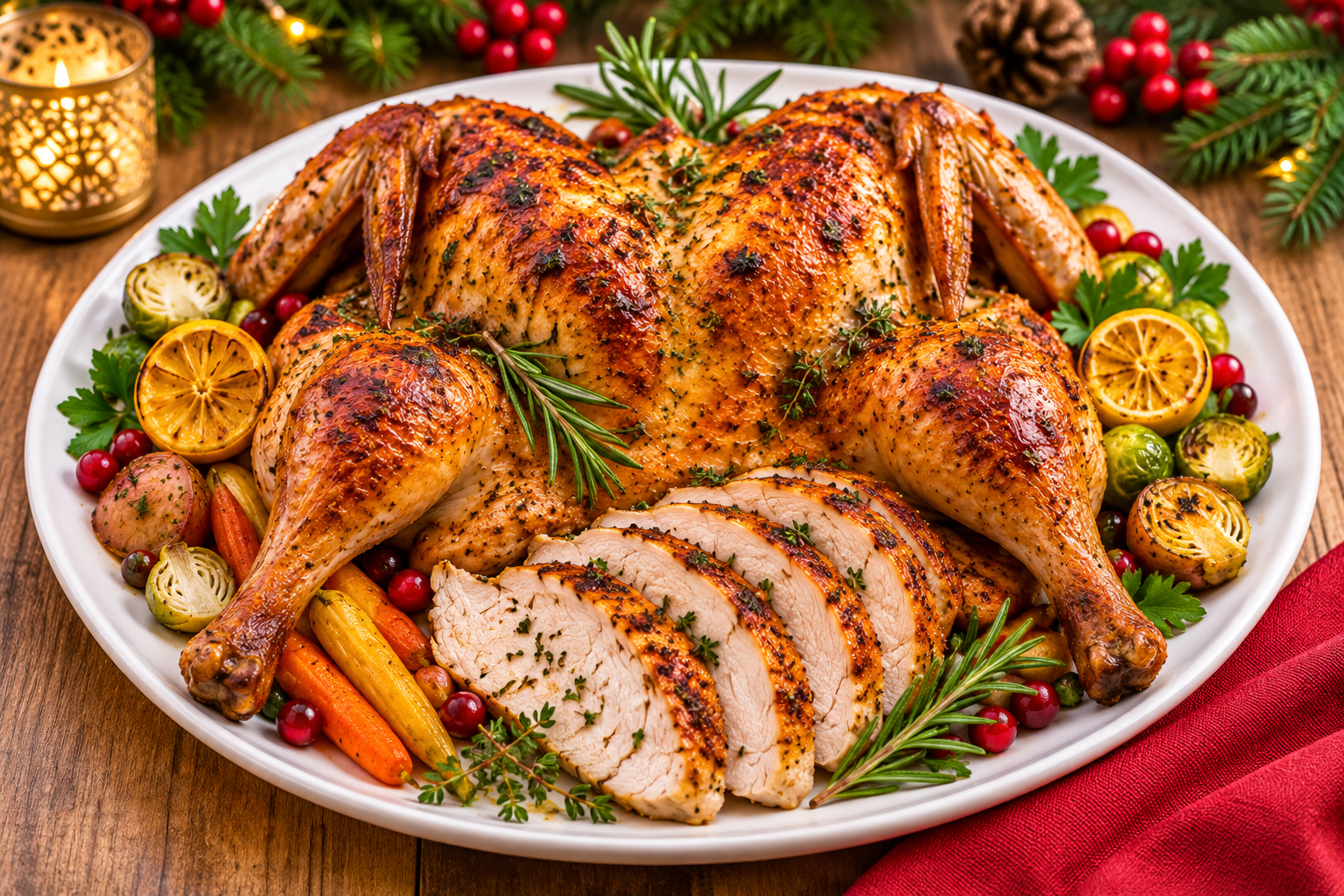
When you want Christmas dinner to feel special without babysitting a bird all afternoon, spatchcock turkey is the move. Flattening the turkey helps it cook evenly, so the breast stays juicy while the legs roast tender and golden.
This method also frees up oven time for sides, and carving is a breeze. I’ll walk you through seasoning, roasting, and resting so you get crisp skin, rich pan juices, and a holiday centerpiece worth a standing ovation.
Why this spatchcock turkey works for the holidays
Spatchcocking exposes more skin to the heat, so you get crispy, evenly browned skin in less time. A 12-pound turkey cooks in about 70 to 90 minutes, leaving room for sides and dessert in the oven. The breast and legs finish at nearly the same time, which means less guesswork and no dry patches.
A simple herb butter under and over the skin seasons every bite. Citrus, onion, and a quick veggie “rack” add gentle aroma and lift the turkey off the pan for better airflow. You’ll also get flavorful pan juices to spoon over slices or whisk into a fast gravy.
What you’ll need for a juicy, crispy spatchcock turkey
Fresh herbs, citrus zest, and plenty of kosher salt build deep flavor, while a touch of baking powder helps the skin shatter-crisp. The veggies under the bird act as a roasting rack and perfume the drippings.
- 1 whole turkey (10 to 12 lb), spatchcocked, backbone removed, breastbone notched to flatten
- 1 tbsp kosher salt, Diamond Crystal; use 2 tsp if using Morton
- 1 tsp baking powder, helps crisp the skin
- 1 1/2 tsp freshly ground black pepper
- 6 tbsp unsalted butter, softened
- 2 tbsp olive oil
- 4 garlic cloves, minced
- 2 tbsp fresh thyme, chopped
- 1 tbsp fresh rosemary, finely chopped
- 1 tbsp fresh sage, chopped
- 1 tsp lemon zest, finely grated
- 1 tsp orange zest, finely grated
- 1 large onion, thickly sliced
- 2 carrots, cut in large chunks
- 2 celery stalks, cut in large chunks
- 1 head of garlic, halved horizontally
- 1 cup low-sodium chicken or turkey stock, plus more as needed
- fresh herbs for garnish, thyme and rosemary sprigs
How to cook a spatchcock turkey step by step
Follow these simple steps, and keep an eye on color and internal temperature to nail the perfect roast.
- Preheat the oven to 450°F (232°C). Line a large rimmed sheet pan with foil and top with a wire rack, or arrange the onion, carrots, celery, and halved garlic to form a vegetable “rack.”
- Pat the spatchcocked turkey very dry with paper towels. In a small bowl, mix the kosher salt, baking powder, and black pepper. In another bowl, combine the softened butter, olive oil, minced garlic, thyme, rosemary, sage, lemon zest, and orange zest.
- Gently loosen the skin over the breasts and thighs with your fingers. Rub about half the herb butter under the skin directly on the meat, and spread the remaining butter all over the skin and underside of the turkey.
- Place the turkey skin side up on the rack or vegetables, tucking the wing tips behind the breasts. Pour 1 cup stock into the pan, avoiding the skin, to start flavorful drippings and reduce smoking.
- Roast at 450°F (232°C) for 20 minutes to jumpstart browning. Reduce the oven temperature to 375°F (190°C) and continue roasting, rotating the pan once for even cooking. Start checking the internal temperature early. The turkey is ready when the thickest part of the breast and the innermost part of the thigh reach at least 165°F (74°C). Cooking time will vary depending on the turkey’s size and your oven.
- If the skin darkens too quickly, tent just the darkest areas with small pieces of foil. Add a splash more stock to the pan if it dries out or begins to scorch.
- Transfer the turkey to a carving board and rest 20 to 30 minutes. Meanwhile, skim excess fat from the pan drippings, mash the roasted garlic into the juices, and reduce briefly on the stovetop for spooning, if desired.
- Carve by removing legs and thighs, then slice the breast meat across the grain. Arrange on a warm platter, spoon with some pan juices, garnish with fresh herbs, and serve hot.
Make-ahead, storage, and reheating tips
You can dry-brine the turkey up to 48 hours ahead. Season it with the salt and baking powder mixture, place it uncovered on a rack over a sheet pan, and refrigerate to let the skin dry slightly. This yields better browning and deeper seasoning.
Leftovers keep 3 to 4 days in the fridge in a covered container. For best texture, slice the breast meat and remove the thighs and drumsticks from the bone before storing. Freeze leftovers for up to 2 months in airtight bags with as much air pressed out as possible.
Reheat gently: arrange slices in a baking dish, drizzle with a little broth, cover, and warm at 300°F (150°C) for 15 to 20 minutes. Skin won’t be as crisp as day one, but a brief uncovered finish can help. Save the carcass for stock; a pot of broth makes great soup, or serve it with a side like fluffy stovetop rice pilaf.
Common mistakes to avoid
- Skipping the pat-dry step: Moist skin won’t brown well. Pat the turkey very dry with paper towels before seasoning.
- Under-salting: A big bird needs more salt than you think. Use kosher salt and season all surfaces, including under the skin.
- Crowding the pan: If your pan is too small, the turkey steams. Use a large, shallow rimmed sheet pan so hot air can circulate.
- Roasting low and slow only: Moderate-high heat kickstarts browning. Start hot, then reduce the oven so the meat stays juicy.
- Cutting too soon: Rest at least 20 minutes. Resting keeps the juices in the meat instead of on your cutting board.
Variations and smart substitutions
- Garlic-lemon twist: Swap orange zest for more lemon zest, add extra garlic, and finish with a squeeze of fresh lemon juice after roasting.
- Smoky-herb rub: Add 2 tsp smoked paprika and 1 tsp ground coriander to the herb butter for a deeper, savory note.
- Dairy-free: Use all olive oil or a dairy-free butter alternative. Brush on generously to keep the skin supple while it crisps.
- Herb swap: No sage? Use marjoram or extra thyme. Dried herbs work in a pinch; use one-third the amount of fresh.
- Gluten-free gravy plan: Thicken drippings with cornstarch slurry instead of flour if you’re serving gluten-free guests.
 Save
What to serve with spatchcock turkey
For appetizers, keep it light and festive: the Christmas Caprese wreath looks stunning on the table, and crispy Parmesan cauliflower bites hit that salty-crunchy craving.
On the side, a simple green salad or cozy fall quinoa salad balances the rich turkey. For dessert, pass a platter of classic Christmas sugar cookies with easy icing for a sweet, nostalgic finish.
Spatchcock turkey FAQs
What size turkey works best for spatchcocking?
Ten to fourteen pounds is the sweet spot for most home ovens and sheet pans. Larger birds are harder to flatten and can crowd the pan, which slows browning. If you need more servings, roast two smaller spatchcocked turkeys on separate racks.
Do I need kitchen shears to spatchcock a turkey?
Heavy-duty kitchen shears make it much easier and safer to remove the backbone. You can use a sharp chef’s knife if needed, but go slowly and keep your non-cutting hand well clear. Many grocery butchers will spatchcock it for you if you ask.
How do I know when the turkey is done?
Use an instant-read meat thermometer to check doneness. The thickest part of the turkey breast and the innermost part of the thigh must reach at least 165°F (74°C) before serving. Avoid touching bone with the thermometer. Let the turkey rest for 20 to 30 minutes before carving to help retain its juices.
Can I dry-brine a frozen turkey that I thawed?
Yes, once fully thawed and patted dry, you can dry-brine 24 to 48 hours ahead. Keep it uncovered in the fridge on a rack to help the skin dry out slightly. This results in better browning and more evenly seasoned meat.
What if the skin is browning too quickly?
Tent just the darkest spots with small pieces of foil and continue roasting. You can also reduce the oven by 25°F (about 15°C) to slow browning if needed. Avoid covering the entire bird or it may steam and lose crispness.
A short and merry send-off
I hope this spatchcock turkey becomes your low-stress, high-reward holiday centerpiece. Crisp skin, juicy meat, and plenty of pan juices are all within reach, even on a busy Christmas day.
If you make it, share how it went and what sides you served. Wishing you a warm kitchen and happy plates.

Spatchcock Turkey Roast for Christmas
Ingredients
Equipment
Method
- Preheat the oven to 450°F (232°C). Line a large rimmed baking sheet with foil and top with a wire rack, or arrange the onion, carrots, celery, and halved garlic to form a vegetable rack.
- Pat the spatchcocked turkey very dry with paper towels. In a small bowl, mix the kosher salt, baking powder, and black pepper. In another bowl, combine the softened butter, olive oil, minced garlic, thyme, rosemary, sage, lemon zest, and orange zest.
- Gently loosen the skin over the breasts and thighs with your fingers. Rub about half the herb butter under the skin directly onto the meat, and spread the remaining butter all over the skin and underside of the turkey.
- Place the turkey skin side up on the rack or vegetables, tucking the wing tips behind the breasts. Pour 1 cup stock into the pan, avoiding the skin, to start flavorful drippings and reduce smoking.
- Roast at 450°F (232°C) for 20 minutes to begin browning. Reduce the oven temperature to 375°F (190°C) and continue roasting, rotating the pan once for even cooking. Start checking the internal temperature early. The turkey is ready when the thickest part of the breast and the innermost part of the thigh both reach at least 165°F (74°C). Cooking time will vary depending on the turkey’s size and your oven.
- If the skin darkens too quickly, tent the darkest areas with small pieces of foil. Add a splash more stock to the pan if it dries out or begins to scorch.
- Transfer the turkey to a carving board and rest for 20 to 30 minutes. Meanwhile, skim excess fat from the pan drippings, mash the roasted garlic into the juices, and reduce briefly on the stovetop for spooning, if desired.
- Carve by removing the legs and thighs, then slice the breast meat across the grain. Arrange on a warm platter, spoon with some pan juices, garnish with fresh herbs, and serve hot.
Notes


Leave a Reply